Author: admin
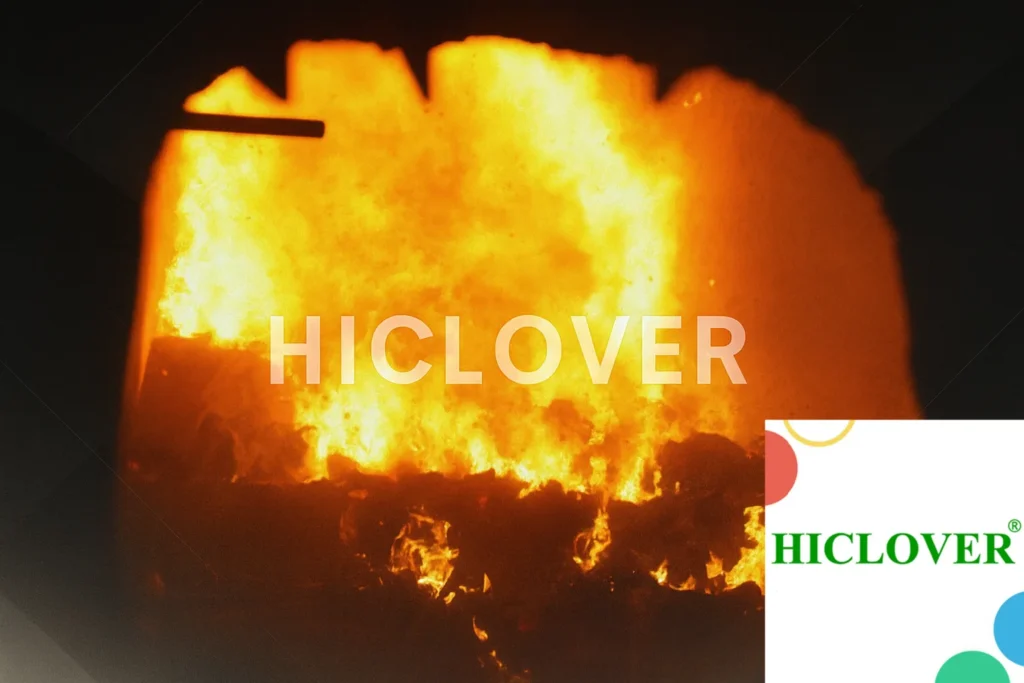
Efficient Waste Management Solutions: The HICLOVER Incinerator
Efficient Waste Management Solutions: The HICLOVER Incinerator
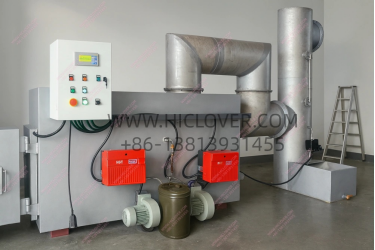
The management of waste, particularly in critical sectors such as healthcare and pharmaceuticals, demands advanced solutions that adhere to stringent industrial standards. The waste incinerator developed by HICLOVER is engineered to handle various types of waste, including medical and pharmaceutical refuse, under high-temperature conditions ranging from 850°C to 1200°C. This range ensures optimal destruction of hazardous materials while complying with international regulations, such as those set forth by the WHO and EU emissions standards. HICLOVER’s incinerators are reliable solutions for hospital waste disposal incinerators and are recognized as a key component in global waste management strategies.
Technical Specifications and Features
The HICLOVER incinerator is distinguished by its dual combustion chamber design. This configuration enhances the completeness of combustion, ensuring that toxic substances are effectively neutralized and emissions are minimized. The primary chamber operates at high temperatures to incinerate waste materials, while the secondary chamber maintains elevated temperatures to further burn off any remaining pollutants. This dual chamber system is critical for achieving the high efficiency rates required in waste management today.
Equipped with programmable logic controllers (PLC), the HICLOVER incinerator allows for automated operation, which significantly reduces the need for manual intervention. Automation is increasingly vital in industrial applications, as it leads to consistent performance and reduced operational costs. The optional integration of dry or wet scrubbers ensures compliance with environmental regulations by effectively removing particulates and harmful gases from the exhaust.
In the context of global infectious disease preparedness, HICLOVER’s incinerators play a crucial role in managing waste generated from healthcare facilities. With the rise of crisis zones and humanitarian camps, the demand for efficient and mobile waste disposal solutions has surged. HICLOVER’s mobile incinerators are particularly advantageous, offering plug-and-play designs that are easily transportable to remote mining or oil camp locations. This adaptability is essential for maintaining hygiene and preventing the spread of disease in areas with limited waste management infrastructure.
Comparative Analysis of Incinerator Types
In the realm of waste disposal, incinerators come in various forms, including fixed, containerized, and mobile units. Fixed incinerators are typically stationary and suited for large-scale operations, while containerized incinerators provide flexibility and mobility, catering to transient waste management needs. HICLOVER specializes in both types, facilitating customizable chamber volumes to meet specific client requirements.
The choice between PLC and manual control systems can significantly affect operational efficiency. PLC systems provide enhanced control over the incineration process, allowing operators to monitor parameters in real-time. This capability is essential in ensuring compliance with hospital incinerator operational standards, thereby reducing the risk of emissions exceeding permissible levels.
Furthermore, discussions around wet versus dry scrubbers are crucial in the context of emissions control. Dry scrubbers utilize a dry reagent to capture pollutants, while wet scrubbers use liquid solutions. The choice largely depends on the specific waste type being processed and the local regulatory framework. HICLOVER’s engineering team can assist clients in selecting the most effective solution for their operational needs.
Global Availability and Customization
HICLOVER’s commitment to global export capabilities ensures that its waste incinerators are accessible to various markets, including Mauritius, Gabon, Togo, and Lesotho. The pricing structures vary significantly across regions; for instance, Mauritius poultry incinerator prices and Togo medical waste incinerator prices are influenced by local economic conditions and regulatory requirements. HICLOVER’s factory direct supply model eliminates middlemen, offering competitive pricing while ensuring high-quality manufacturing standards.
Our extensive experience in engineering waste management solutions allows HICLOVER to provide customizable designs tailored to specific client needs. For example, clients in Central Africa can receive customized solutions for pet cremation prices, while those in Seychelles can inquire about the cost associated with animal incinerators. Each unit is designed with a focus on efficiency, reliability, and ease of use in diverse environments.
Engineering Excellence and Supply Chain Stability
The manufacturing capabilities at HICLOVER are backed by a robust supply chain, ensuring that components are readily available for assembly and maintenance of incinerators. This stability is critical for clients who require timely delivery and support, especially in regions where waste management infrastructure is still developing. The engineering experience of HICLOVER is not only pivotal in designing effective waste incinerators but also in ensuring that these systems can adapt to various environmental and regulatory challenges faced by clients worldwide.
As pressures mount globally to reduce carbon emissions and comply with ESG standards, the significance of waste incinerators in waste management cannot be overstated. HICLOVER’s technology supports energy recovery systems that convert waste into usable energy, thereby contributing to sustainable practices. This innovative approach aligns with the growing trend towards decentralized waste management, where local solutions are preferred for efficiency and efficacy.
Conclusion: A Commitment to Innovation and Excellence
HICLOVER’s waste incinerators represent a convergence of advanced technology, engineering precision, and practical solutions for modern waste management challenges. With a strong focus on high-temperature operation, dual combustion chambers, and compliance with international standards, HICLOVER is positioned as a leader in the waste incineration industry. For comprehensive information on HICLOVER’s offerings, visit the official website at https://www.hiclover.com/. The future of waste management is here, and it is equipped with the cutting-edge solutions provided by HICLOVER.


Advanced Waste Management Solutions: The HICLOVER Waste Incinerator
Advanced Waste Management Solutions: The HICLOVER Waste Incinerator
Introduction to HICLOVER Waste Incinerators
The increasing global emphasis on efficient waste management has led to the development of advanced waste incinerators like those manufactured by HICLOVER. These systems are particularly designed to handle various types of waste, including medical and animal waste, meeting stringent industrial standards for safety and efficiency. The medical waste incinerator combustion temperature typically ranges from 850°C to 1200°C, ensuring complete destruction of harmful pathogens and contaminants. HICLOVER’s engineering reliability and innovative design make their incinerators a preferred choice for diverse applications, including installations in crisis zones, humanitarian camps, and remote industrial sites.
Technical Specifications and Operational Efficiency
HICLOVER offers a variety of models tailored to different capacities and operational requirements. The medical waste incinerator capacity options range from small models suitable for clinics to large systems designed for hospitals and health organizations. The incinerators are equipped with dual combustion chambers that ensure high-temperature retention, promoting complete combustion and minimizing emissions.
One of the main advantages of HICLOVER waste incinerators is their compliance with global health and environmental regulations, including WHO and EU emission frameworks. These systems are engineered with advanced combustion principles that allow for efficient burning of waste, effectively reducing volume by up to 90% while generating fewer harmful pollutants. The integration of either wet or dry scrubbers further enhances emission control, making these incinerators suitable for areas with strict environmental policies.
Types of Incinerators and Their Applications
Different applications require specific incinerator types. HICLOVER’s offerings include small waste incinerators, which are ideal for facilities with limited waste output, and large incinerators designed for high-volume waste management needs. Their containerized modular systems facilitate easy transport and installation, particularly beneficial in remote locations.
For agricultural and veterinary applications, HICLOVER provides Cote d’Ivoire animal waste incinerators and Somalia animal incinerators from China, which are engineered to handle various types of animal by-products safely. These solutions are vital for preventing disease spread and ensuring public health.
Urban waste management is another vital sector where HICLOVER is making strides, especially in regions like Libya, with reliable Libya garbage incinerators that can manage municipal solid waste effectively. Each model is designed considering regional waste characteristics and compliance with local regulations.
Comparative Analysis of Incinerator Types
The choice between fixed and containerized incinerators depends on various factors such as site location, waste type, and operational flexibility. Fixed systems often have higher initial setup costs but provide long-term operational stability, while containerized systems offer mobility and ease of installation, making them suitable for temporary setups like humanitarian aid missions.
The control system of an incinerator also impacts its efficiency. HICLOVER waste incinerators come with either PLC automation or manual controls. PLC systems offer precision operation and monitoring, which is crucial in environments requiring stringent waste management protocols. Manual systems, while simpler, may not provide the same level of operational oversight.
Additionally, the choice between dry and wet scrubber systems can significantly influence emission levels. Dry scrubbers are often easier to maintain and operate, while wet scrubbers can be more effective in removing acidic gases and particulates. HICLOVER provides options to tailor these features according to the specific needs of their clients.
Engineering Expertise and Supply Chain Reliability
HICLOVER stands out for its direct factory supply model, ensuring that clients receive products directly from the manufacturer without intermediary markup. This approach not only guarantees competitive pricing but also enhances transparency in the sourcing of materials and engineering processes.
With extensive engineering experience and a stable supply chain, HICLOVER is committed to meeting the demands of its global clientele. The company’s capacity to customize chamber volume according to the specific needs of different industries ensures that clients receive the most suitable waste management solutions.
The company’s focus on multi-fuel capability—accommodating diesel, LPG, and natural gas—further enhances the versatility of their systems. This adaptability is particularly advantageous for remote mining or oil camps where fuel sources may vary, ensuring uninterrupted operation.
Environmental Considerations and Future Trends
The global discourse around carbon emissions and environmental sustainability has prompted increased demand for efficient waste management solutions. HICLOVER’s waste incinerators are designed with ESG compliance in mind, contributing to carbon emission reduction strategies. As societies push for greener technologies, HICLOVER is positioned to lead in the adoption of energy recovery systems, turning waste into energy while mitigating environmental impact.
Digital automation in industrial equipment is evolving rapidly, and HICLOVER is at the forefront of integrating smart technology into its incinerators. This advancement not only enhances operational efficiency but allows for real-time monitoring and data analysis, further optimizing waste management processes.
In response to the global infectious disease preparedness discourse, HICLOVER’s medical waste incinerators play a crucial role in managing biohazardous waste effectively, particularly in the wake of crises. The need for reliable waste management solutions in humanitarian settings underscores the importance of HICLOVER’s offerings.
Conclusion
HICLOVER waste incinerators represent a significant advancement in waste management technology. With a comprehensive range of models tailored to various industries, rigorous compliance with international standards, and a commitment to environmental sustainability, HICLOVER is poised to meet the demands of modern waste management effectively. Their engineering expertise, customizable solutions, and reliable supply chain further solidify their status as industry leaders in waste incineration technology.

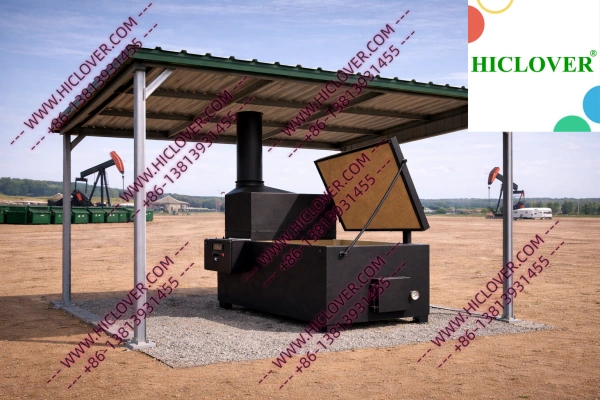
HICLOVER Oilfield Camp Domestic Waste Incineration Solution
HICLOVER Oilfield Camp Domestic Waste Incineration Solution
(Stable Operation | Low Smoke & Low Odor | Modular & Mobile Deployment)
Oilfield camps and remote workforce accommodations generate domestic waste every day. This camp waste typically includes food waste (high-moisture organics), plastic packaging, cartons, disposable items, and cleaning consumables. In real field conditions, the waste stream is often mixed, wet, and inconsistent, which can lead to odor issues, smoke peaks, and unreliable burning performance if not handled with a purpose-built system.
The HICLOVER Oilfield Camp Domestic Waste Incineration Solution is designed for on-site waste disposal in remote locations where landfill access is limited and off-site transportation is expensive. It supports practical camp operations by delivering:
Stable combustion → reduced smoke/odor risk → high volume reduction → easy operation → simplified maintenance → fast deployment
Typical Waste Types (Camp MSW)
This solution is suitable for common oilfield camp domestic waste, such as:
Food and wet waste: leftovers, kitchen scraps, organic waste
Mixed household waste: paper, cartons, plastic film, foam, general trash
Cleaning and hygiene waste: gloves, masks, rags, used bags
Minor contaminants: small amounts of sand, glass, and metal fragments
Where It’s Used
HICLOVER camp incinerators are suitable for:
Oilfield living areas: canteen zones, dormitories, logistics areas
Temporary construction camps: varying waste loads depending on workforce size
Remote sites & field stations: where waste transport is difficult
Odor-sensitive areas: camps near residential units or management offices
Key Advantages for Oilfield Camp Waste Incineration
To meet oilfield camp requirements, the system is optimized for:
Mixed waste with high moisture content, improving operational stability
Lower smoke and odor performance, supporting better camp environment control
Easy and repeatable operation, suitable for rotating teams and multiple shifts
Durable design with convenient maintenance access, for frequent daily use
Flexible fuel options: Diesel / Natural Gas / LPG (depending on local availability)
Mobile or containerized modular configurations (optional) for fast installation in remote areas
Recommended Configuration Options
Option A ― Standard Camp Waste Incinerator (Cost-Efficient)
For daily camp domestic waste disposal with stable operation focus.
Option B ― Low Smoke & Low Odor Enhanced Type
For camps with higher environmental expectations or closer living areas.
Option C ― Rapid Deployment Mobile / Containerized Solution
For temporary camps, project expansion phases, and sites requiring plug-and-play installation.
If you are looking for a reliable waste incinerator for oilfield camps, a camp domestic waste incinerator, or a mobile waste incineration solution for remote sites, HICLOVER provides a practical system designed for field conditions. The solution helps reduce daily waste accumulation, minimize transport dependence, and improve overall camp waste management efficiency with stable operation and flexible deployment options.
HICLOVER ― Waste Incinerator Manufacturer
Website: www.hiclover.com
Email: [email protected]
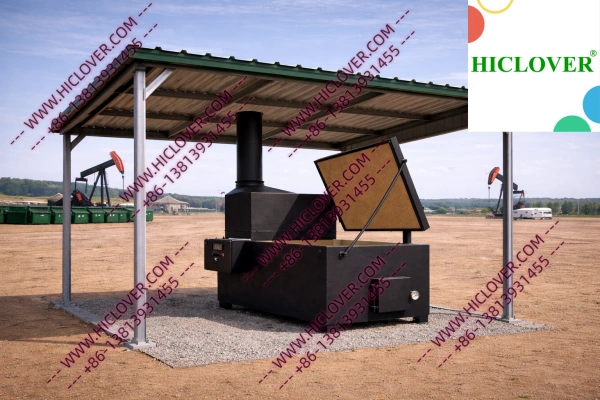
r5vg7
HICLOVER Oilfield Camp Domestic Waste Incineration Solution
(Stable Operation | Low Smoke & Low Odor | Modular & Mobile Deployment)
Oilfield camps and remote workforce accommodations generate domestic waste every day. This camp waste typically includes food waste (high-moisture organics), plastic packaging, cartons, disposable items, and cleaning consumables. In real field conditions, the waste stream is often mixed, wet, and inconsistent, which can lead to odor issues, smoke peaks, and unreliable burning performance if not handled with a purpose-built system.
The HICLOVER Oilfield Camp Domestic Waste Incineration Solution is designed for on-site waste disposal in remote locations where landfill access is limited and off-site transportation is expensive. It supports practical camp operations by delivering:
Stable combustion → reduced smoke/odor risk → high volume reduction → easy operation → simplified maintenance → fast deployment
Typical Waste Types (Camp MSW)
This solution is suitable for common oilfield camp domestic waste, such as:
Food and wet waste: leftovers, kitchen scraps, organic waste
Mixed household waste: paper, cartons, plastic film, foam, general trash
Cleaning and hygiene waste: gloves, masks, rags, used bags
Minor contaminants: small amounts of sand, glass, and metal fragments
Where It’s Used
HICLOVER camp incinerators are suitable for:
Oilfield living areas: canteen zones, dormitories, logistics areas
Temporary construction camps: varying waste loads depending on workforce size
Remote sites & field stations: where waste transport is difficult
Odor-sensitive areas: camps near residential units or management offices
Key Advantages for Oilfield Camp Waste Incineration
To meet oilfield camp requirements, the system is optimized for:
Mixed waste with high moisture content, improving operational stability
Lower smoke and odor performance, supporting better camp environment control
Easy and repeatable operation, suitable for rotating teams and multiple shifts
Durable design with convenient maintenance access, for frequent daily use
Flexible fuel options: Diesel / Natural Gas / LPG (depending on local availability)
Mobile or containerized modular configurations (optional) for fast installation in remote areas
Recommended Configuration Options
Option A ― Standard Camp Waste Incinerator (Cost-Efficient)
For daily camp domestic waste disposal with stable operation focus.
Option B ― Low Smoke & Low Odor Enhanced Type
For camps with higher environmental expectations or closer living areas.
Option C ― Rapid Deployment Mobile / Containerized Solution
For temporary camps, project expansion phases, and sites requiring plug-and-play installation.
If you are looking for a reliable waste incinerator for oilfield camps, a camp domestic waste incinerator, or a mobile waste incineration solution for remote sites, HICLOVER provides a practical system designed for field conditions. The solution helps reduce daily waste accumulation, minimize transport dependence, and improve overall camp waste management efficiency with stable operation and flexible deployment options.
HICLOVER ― Waste Incinerator Manufacturer
Website: www.hiclover.com
Email: [email protected]

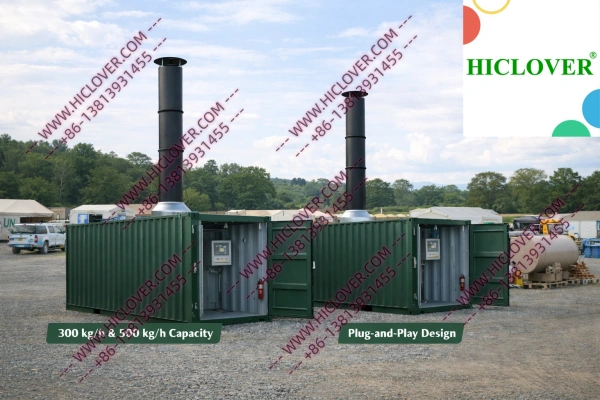
HICLOVER Mobile Containerized Waste Incinerator (Plug-and-Play, 300 kg/h & 500 kg/h)
HICLOVER Mobile Containerized Waste Incinerator (Plug-and-Play, 300 kg/h & 500 kg/h)
When international projects demand fast waste disposal capacity with minimal onsite installation, HICLOVER delivers a proven answer: the HICLOVER Mobile Containerized Waste Incinerator. Built as a Plug-and-Play containerized incineration system, this solution is designed for overseas buyers who need rapid deployment, stable daily operation, and a factory-integrated structure that drastically reduces field workload and site risk.
Unlike conventional incinerator setups that require complex civil works, long commissioning schedules, and large technical teams, the HICLOVER unit is engineered as a ready-to-run container incinerator system for export projects. It arrives as a complete package that supports quick positioning, simplified connections, and fast startup―ideal for remote, temporary, or high-pressure operations.
Why Choose a Mobile Containerized Waste Incinerator?
A mobile containerized waste incinerator is not just a transport format―it is a strategy to control time, cost, and operational reliability. For many buyers, the main challenge is not purchasing the incinerator itself, but completing installation in difficult environments. HICLOVER solves this by providing a factory-assembled containerized waste incinerator for remote areas, engineered for predictable deployment and repeatable performance.
This is why the system is often searched and specified as:
-
plug and play containerized waste incinerator
-
mobile container incinerator for remote camps
-
containerized waste incinerator manufacturer for export
-
ready-to-use mobile waste incinerator solution
-
container incinerator system with quick commissioning
-
modular waste incinerator in 20ft container
-
transportable waste incineration unit for international projects
Capacity Options for Real-World Operations: 300 kg/h or 500 kg/h
HICLOVER offers two practical models based on daily waste volume and operational intensity:
300 kg/h Mobile Containerized Waste Incinerator
Designed for stable daily disposal needs such as:
-
camps and accommodation communities
-
hospitals and medical support facilities
-
institutions and public service locations
-
daily municipal waste streams at small to mid scale
Common buyer keywords include:
-
300 kg/h containerized waste incinerator for camps
-
mobile waste incinerator for hospitals in remote locations
-
container incinerator for daily municipal solid waste
500 kg/h Mobile Containerized Waste Incinerator
Optimized for higher-volume collection points, including:
-
centralized disposal sites
-
multi-camp cluster operations
-
high-demand industrial zones
-
large project communities with continuous waste generation
Often searched as:
-
500 kg/h high capacity mobile containerized waste incinerator
-
containerized waste disposal incinerator for centralized operations
-
industrial container incinerator for high volume waste management
Plug-and-Play Factory Integration: Built for Overseas Deployment
The HICLOVER system is designed around a “deployment-first” philosophy. Every detail is optimized for overseas delivery and operational readiness:
Containerized Structure for Logistics + Protection
The incinerator is built into a containerized body, supporting:
-
streamlined shipping and international transport
-
weather protection and site security
-
easier access for inspection and maintenance
-
controlled organization of electrical and operational components
This structure makes it a strong match for:
-
mobile containerized waste incinerator for export
-
relocatable container incinerator for project-based operations
-
containerized incinerator system for rapid overseas commissioning
Reduced Installation Time and Onsite Labor
HICLOVER focuses on simplified deployment to minimize dependence on local contractors. Buyers typically choose this format when they need:
-
quick installation waste incinerator system
-
mobile incinerator with minimal civil works
-
container incinerator requiring limited onsite assembly
-
fast commissioning containerized waste incinerator
Key Technical Features Highlighted by HICLOVER
HICLOVER positions this product line as a reliable, export-ready solution with strong technical value. Depending on the configuration, the system can include:
-
stable high-temperature incineration process for controlled destruction
-
operational layout designed for efficiency and consistent throughput
-
integrated system arrangement for reduced operator burden
-
modular structure supporting relocation and site changes
-
export-oriented build standard for international project demands
In many procurement searches, buyers look for combinations such as:
-
mobile containerized waste incinerator with automatic control
-
container incinerator system with reliable continuous operation
-
plug and play incinerator for overseas projects
-
transportable waste incineration equipment for remote sites
Application Scenarios: Where HICLOVER Performs Best
HICLOVER mobile containerized waste incinerators are widely suited for international projects that require immediate waste control and stable operation:
UN, NGO & Humanitarian Programs
Remote aid operations frequently need reliable disposal without long installation lead time:
-
mobile container incinerator for UN NGO camps
-
containerized waste incinerator for humanitarian response
-
plug and play incinerator for emergency waste management
Mining Camps & Industrial Sites
Mining environments require tough equipment and predictable performance:
-
mobile containerized waste incinerator for mining camps
-
container incinerator for remote industrial facilities
-
waste incinerator in container for resource projects
Oilfield Sites & Desert Operations
Oilfield camps and desert locations benefit from fast deployment systems:
-
mobile container incinerator for oilfield sites
-
containerized waste incinerator for desert camps
-
transportable incinerator solution for remote operations
Construction Communities & Temporary Projects
Large workforce camps generate daily solid waste and require quick disposal solutions:
-
containerized waste incinerator for construction camp
-
mobile incinerator system for temporary project sites
-
relocatable container incinerator for infrastructure projects
Remote Public Facilities
Utilities and public service installations often operate with limited manpower:
-
mobile containerized waste incinerator for remote public facilities
-
plug and play waste disposal incinerator for isolated communities
-
container incinerator solution for off-grid operations
HICLOVER Brand Advantage: Manufacturer Supply for Export Buyers
As an experienced manufacturer, HICLOVER supports global buyers seeking direct factory supply, stable export quality, and fast delivery for overseas projects. This is why the product is frequently specified as:
-
HICLOVER mobile containerized waste incinerator manufacturer
-
containerized incinerator supplier for overseas buyers
-
plug and play container incinerator factory direct
-
ready-to-use waste incinerator container for export markets
If your project requires a dependable solution with fast deployment, reduced onsite risk, and practical throughput, HICLOVER provides a containerized incinerator concept engineered for real-world international operations.
HICLOVER | Mobile Containerized Waste Incinerator Manufacturer
Website: www.hiclover.com
Email: [email protected]
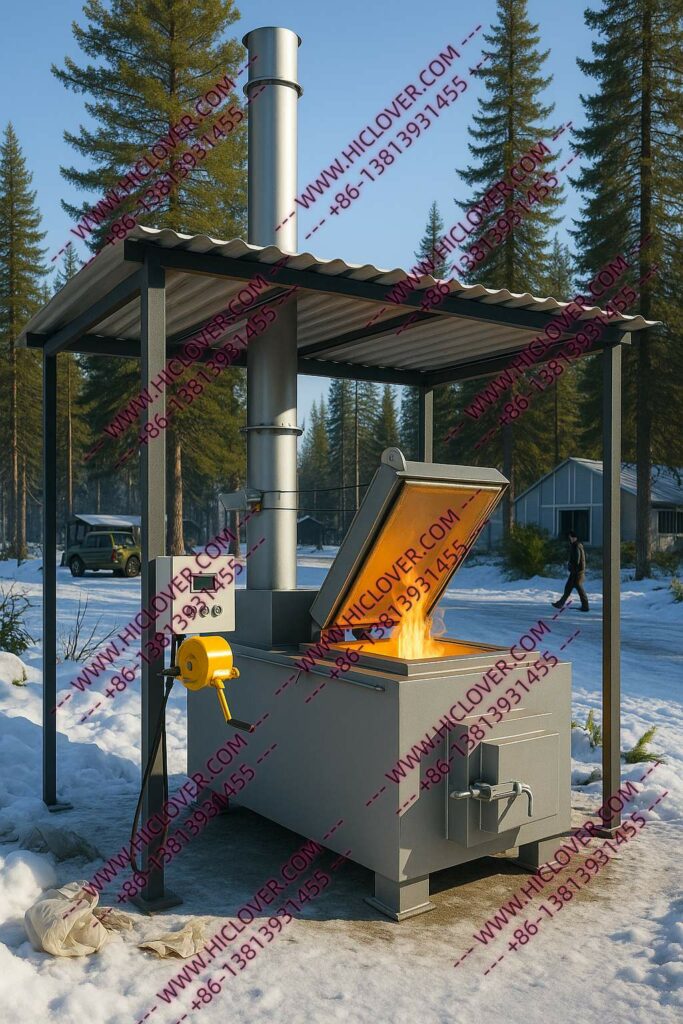
PLC Controlled Hospital Incinerator Systems in Daily Healthcare Operations
PLC Controlled Hospital Incinerator Systems in Daily Healthcare Operations
In hospital environments, medical waste handling is not an abstract policy issue but a daily operational task. Used syringes, contaminated dressings, pathological residues, and expired pharmaceuticals must be treated quickly to reduce infection risk for staff and patients. In many facilities across Ghana, incineration remains a practical and commonly adopted method because it allows on-site treatment without relying on complex external logistics.
For procurement teams and hospital engineers, searches related to a PLC controlled hospital incinerator Ghana are often driven by one concern: how reliably the system can operate with limited manpower, variable power supply, and strict attention to smoke, odor, and safety.
Why PLC Control Matters in Hospital Incineration
Traditional manually operated incinerators depend heavily on operator experience. In hospitals where staff rotation is frequent and technical training time is limited, this creates operational risk. PLC-controlled systems address this by embedding operating logic directly into the control platform.
A PLC controlled hospital incinerator uses programmed sequences to manage burner ignition, temperature ramp-up, combustion holding time, and safe shutdown. This reduces manual intervention and helps maintain consistent operating conditions during daily waste disposal routines.
Combustion Structure Commonly Used with PLC Systems
Primary and Secondary Chambers
Technical configurations typically begin with a dual-chamber layout. The primary chamber is designed for direct combustion of medical waste and normally operates at temperatures around 850 °C. This stage focuses on waste volume reduction and destruction of infectious materials.
Downstream, a secondary chamber operates at higher temperatures, often approaching 1100 °C. Its role is to re-burn flue gases generated in the primary chamber. By sustaining high-temperature oxidation, the secondary chamber helps reduce odors and visible smoke linked to incomplete combustion. This structure is a commonly adopted configuration for hospitals and is designed in line with common healthcare waste management practices.
Temperature Stability Through Automated Logic
PLC control is closely linked to temperature stability. Sensors continuously monitor chamber conditions and feed data back to the control unit, which adjusts burner output accordingly. This closed-loop logic supports steady high-temperature operation even when waste composition varies.
In facilities where grid power can be unstable, diesel-fired burners are frequently specified. Technical descriptions often explain how fuel-based combustion systems maintain thermal continuity independent of electrical fluctuations, a practical consideration for many hospitals.
Operator Safety and Reduced Manual Dependence
From an operational standpoint, PLC-controlled incinerators are designed to lower reliance on constant human oversight. Interlocks prevent unsafe actions such as door opening at elevated temperatures, while alarm functions notify operators of abnormal conditions.
For small hospitals and clinics, this automation reduces training requirements. For regional hospitals with higher waste volumes, it supports extended daily operation without increasing staffing levels.
Flue Gas Treatment Options Integrated into PLC Control
Emission control is another area where PLC systems add value. Dry flue gas treatment units are often presented as baseline options, offering acid gas neutralization with relatively simple maintenance. For projects with stricter performance expectations, wet scrubber systems may be integrated.
Documentation typically explains how the PLC coordinates auxiliary equipment―such as pumps or fans―ensuring that gas treatment stages operate in sync with combustion. These options are described without absolute compliance claims, allowing project owners to align configurations with local review processes.
Application Across Different Hospital Scales
A PLC controlled hospital incinerator is not limited to large facilities. Compact, containerized units are frequently selected by clinics and small hospitals seeking minimal civil work and faster installation. Regional and teaching hospitals may adopt larger systems designed for continuous or semi-continuous operation.
Across these scales, the control philosophy remains consistent, which simplifies spare parts planning and operator familiarization when multiple facilities are managed under a single healthcare authority.
HICLOVER as a Manufacturing Source
HICLOVER operates as a manufacturing factory supplying standardized hospital incinerator models with PLC-based control systems for export markets. Rather than one-off designs, its equipment follows repeatable configurations supported by technical manuals, control logic descriptions, and remote coordination during installation and commissioning.
System overviews, configuration options, and general technical information are available through the official website:
https://www.hiclover.com/
This manufacturer-focused approach supports hospitals, EPC contractors, and NGOs that rely on English-language technical searches when evaluating incineration solutions.
Practical Considerations for Project Evaluation
When reviewing a PLC controlled hospital incinerator in Ghana, decision-makers typically look beyond nominal capacity. Attention is given to how automation supports safe operation, how combustion stages are controlled, and how emission-related concerns such as black smoke and odor are addressed in routine use.
For hospitals operating under real-world constraints, PLC control is less about advanced electronics and more about predictable, repeatable daily performance within existing healthcare infrastructure.
Egypt Waste & Medical Waste Incinerator Market Report
Egypt Waste & Medical Waste Incinerator Market Report
Strategic Review Across Cairo, Giza, Alexandria, Suez, Port Said, Aswan
1. Egypt context: why incineration remains a critical pillar
Egypt is one of Africa’s largest and most complex waste markets. With a population exceeding 100 million, dense urban corridors along the Nile, and rapidly expanding healthcare and industrial sectors, Egypt faces simultaneous pressure from volume, regulation, and public health risk.
Waste generation and institutional demand are concentrated in:
-
Cairo and Giza – mega-urban healthcare clusters, ministries, laboratories
-
Alexandria – coastal metropolis, port, petrochemical and industrial zones
-
Suez and Port Said – canal logistics, industrial parks, port services
-
Aswan – southern regional hub with hospitals and public institutions
In Egypt, incineration is not a replacement for landfill or recycling. It is a targeted solution for medical waste, hazardous institutional waste, and specific solid waste streams that require secure destruction.
2. Structural characteristics of the Egyptian incinerator market
A. Strong regulatory and policy influence
Egypt has progressively tightened controls on medical and hazardous waste, particularly in large cities. Projects are increasingly shaped by:
-
national health regulations,
-
environmental authority oversight,
-
donor and international framework requirements.
B. Scale disparity across regions
While Cairo and Alexandria require higher-capacity and better-documented systems, many secondary cities and institutional sites need compact, decentralized solutions. This creates a dual market:
-
fixed installations in large urban hospitals,
-
mobile or containerized incinerators for regional and project-based use.
C. Infrastructure variation
Reliable grid power is not universal, especially outside major cities. As a result, diesel-fired incinerators with autonomous operation remain highly relevant across Egypt.
3. City-based demand analysis
Cairo & Giza – Healthcare density and institutional demand
As Egypt’s core healthcare zone, Cairo and Giza host:
-
national referral hospitals,
-
teaching hospitals and laboratories,
-
ministries and regulatory bodies.
Incinerators here are primarily used for:
-
infectious medical waste,
-
pharmaceutical destruction,
-
secure institutional waste handling.
Projects associated with international institutions typically require dual-chamber incinerators, clear operating documentation, and operator training.
Alexandria – Port, industry, and healthcare
Alexandria combines urban healthcare demand with port and industrial waste streams. Incinerators are often deployed within:
-
hospital compounds,
-
industrial facilities,
-
logistics and port-related service zones.
Containerized incinerators are attractive due to space constraints and the need for modular deployment.
Suez & Port Said – Canal and logistics corridor
Along the Suez Canal, waste management must serve:
-
industrial parks,
-
port clinics,
-
institutional facilities.
Here, mobile and containerized incinerators are valued for their ability to integrate into controlled compounds without heavy civil works.
4. Role of the United Nations and international institutions in Egypt
In Egypt, United Nations agencies and international organizations act as technical reference points, especially in healthcare and environmental projects.
Their influence is visible through:
-
WHO-aligned healthcare waste management practices,
-
UNDP-supported environmental governance programs,
-
donor-funded hospital upgrades.
UN-linked procurement emphasizes:
-
documented performance,
-
training and safety procedures,
-
proven combustion technology rather than experimental systems.
5. Market demand trends in Egypt
-
Medical waste incineration remains the most regulated and stable segment, especially in Cairo and Alexandria.
-
Containerized and modular incinerators are gaining traction for regional hospitals and project-based installations.
-
Buyers increasingly favor systems that can be relocated or expanded, reflecting phased investment strategies.
-
Emission control expectations are rising but remain practical and project-specific, not excessive.
6. Product–market fit: HICLOVER solutions for Egypt
HICLOVER incinerators align well with Egypt’s mixed-scale, regulation-aware market, particularly through mobile, containerized, and modular configurations:
-
Medical waste incinerators for hospitals and laboratories
Suitable for Cairo, Giza, and Alexandria healthcare facilities.
→ Medical Waste Incinerator Systems
https://www.hiclover.com/medical-waste-incinerator/ -
Top-loading incinerators for mixed medical and institutional waste
Effective where waste segregation is inconsistent and batch operation is preferred.
→ Top-Loading Waste Incinerators
https://www.hiclover.com/top-loading-incinerator/ -
Containerized mobile incinerators (key advantage for Egypt)
Designed for rapid deployment in Suez, Port Said, and regional cities, with minimal site preparation.
→ Containerized Mobile Incinerators
https://www.hiclover.com/containerized-mobile-incinerators/ -
Optional modular flue-gas treatment systems
Applied selectively in dense urban areas or donor-backed projects.
→ Incinerator with Wet Scrubber System
https://www.hiclover.com/incinerator-with-1-or-3-section-type-wet-scrubber/
Key advantage in Egypt:
HICLOVER emphasizes containerized mobility, modular expansion, diesel compatibility, and compliance-ready design, supporting both large urban hospitals and decentralized regional deployments.
7. Strategic theme highlight: “Modular incineration for scalable compliance”
A highly effective positioning theme for Egypt is:
“Modular, containerized incineration for scalable healthcare and institutional compliance.”
This reflects Egypt’s real procurement logic:
-
regulations are tightening,
-
budgets are phased,
-
infrastructure varies widely by region.
It resonates with hospital administrators in Cairo, industrial operators in Alexandria, and project managers in Suez and Port Said.
Résumé en français (bref)
En Égypte, l’incinération joue un rôle clé dans la gestion des déchets médicaux et des déchets solides sensibles, notamment au Caire, à Gizeh, à Alexandrie, à Suez et à Port-Saïd. Les Nations Unies et les institutions internationales influencent fortement les normes et les spécifications techniques. Les solutions mobiles, containerisées et modulaires sont de plus en plus recherchées pour répondre aux exigences réglementaires tout en conservant une grande flexibilité opérationnelle. Les incinérateurs HICLOVER sont bien adaptés aux réalités du marché égyptien.
Mobile: +86-13813931455(WhatsApp)
Website: www.hiclover.com
2025-12-13/22:35:38
|
Incinerator Items/Model |
HICLOVER TS100(PLC)
|
|
Burn Rate (Average) |
100kg/hour |
|
Feed Capacity(Average) |
150kg/feeding |
|
Control Mode |
PLC Automatic |
|
Intelligent Sensor |
Continuously Feeding with Worker Protection |
|
High Temperature Retention(HTR) |
Yes (Adjustable) |
|
Intelligent Save Fuel Function |
Yes |
|
Primary Combustion Chamber |
1200Liters(1.2m3) |
|
Internal Dimensions |
120x100x100cm |
|
Secondary Chamber |
600L |
|
Smoke Filter Chamber |
Yes |
|
Feed Mode |
Manual |
|
Burner Type |
Italy Brand |
|
Temperature Monitor |
Yes |
|
Temperature Thermometer |
Corundum Probe Tube, 1400℃Rate. |
|
Temperature Protection |
Yes |
|
Automatic Cooling |
Yes |
|
Automatic False Alarm |
Yes |
|
Automatic Protection Operator(APO) |
Yes |
|
Time Setting |
Yes |
|
Progress Display Bar |
3.7 in” LCD Screen |
|
Oil Tank |
200L |
|
Chimney Type |
Stainless Steel 304 |
|
1st. Chamber Temperature |
800℃–1000℃ |
|
2nd. Chamber Temperature |
1000℃-1300℃ |
|
Residency Time |
2.0 Sec. |
|
Gross Weight |
7000kg |
|
External Dimensions |
270x170x190cm(Incinerator Main Body) |
|
Burner operation |
Automatic On/Off |
|
Dry Scrubber |
Optional |
|
Wet Scrubber |
Optional |
|
Top Loading Door |
Optional |
|
Asbestos Mercury Material |
None |
|
Heat Heart Technology(HHT) |
Optional |
|
Dual Fuel Type(Oil&Gas) |
Optional |
|
Dual Control Mode(Manual/Automatic) |
Optional |
|
Temperature Record |
Optional |
|
Enhanced Temperature Thermometer |
Optional |
|
Incinerator Operator PPE Kits |
Optional |
|
Backup Spare Parts Kits |
Optional |
|
Mobile Type |
Optional:Containerized/Trailer/Sledge Optional |
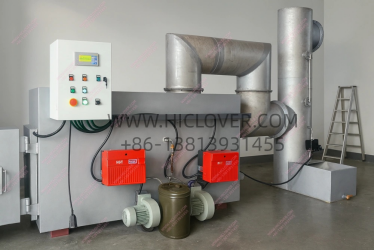
Uganda Waste Incinerator Market Report (2025): Demand, Trends, and Fit for Field-Ready Systems
Uganda Waste Incinerator Market Report (2025): Demand, Trends, and Fit for Field-Ready Systems
1) Market snapshot: why Uganda is a “decentralized disposal” market
Uganda’s waste challenge is most visible in Kampala, but the demand is not limited to the capital. The practical market for incineration equipment is distributed across Kampala, Entebbe, Jinja, Mukono, Mbarara, Gulu, Mbale, Arua, Masaka, and Fort Portal—where waste volumes rise faster than treatment and collection capacity.
Two realities shape buyer behavior in Uganda:
-
Landfill pressure and public scrutiny. Kampala’s main disposal system has faced repeated environmental and public-health concerns; research specifically discusses risks around Kiteezi landfill and its surrounding environment.
-
Regulated separation of hazardous vs non-hazardous waste. Uganda’s regulator NEMA frames waste governance with rules that distinguish hazardous from non-hazardous waste and set compliance expectations under the National Environment (Waste Management) Regulations, 2020.
This combination pushes procurement away from “one perfect central plant” and toward many smaller, reliable treatment points—especially for healthcare, institutional, and emergency-response waste.
2) What Uganda is buying: the real demand segments
A. Healthcare waste: the most consistent driver
In Uganda, incineration demand is strongest where waste is infectious, sharps-heavy, or time-sensitive: government hospitals, district health facilities, laboratories, and NGO/UN-supported clinics across Kampala, Gulu, Mbale, Mbarara, and Arua.
Uganda has had formal planning and guidance work around healthcare waste management for years (national guidelines and planning documents exist), which keeps treatment equipment on procurement lists even when budgets are constrained.
At the same time, global health guidance recognizes that healthcare waste treatment choices depend on resources and operational constraints—incineration remains common in low-resource settings when managed properly.
Buyer preference in Uganda: not “the biggest incinerator,” but the most dependable system that can run with limited spares, variable operator skill, and inconsistent utilities.
B. Municipal and institutional waste: selective, location-driven
For general MSW, Uganda’s trend is toward improved collection, sorting, recycling/value recovery—particularly in the Greater Kampala Metropolitan Area—but treatment gaps remain, and municipalities differ widely in capability.
Incineration opportunities exist mainly for:
-
Institutions (universities, prisons, industrial compounds)
-
High-risk fractions (contaminated waste, event-driven surges, disaster response)
-
Remote districts where transport to centralized disposal is unreliable
C. Emergency and camp-style operations (often donor-funded)
Uganda hosts complex humanitarian and public-health operations at times. In these situations, the requirement is frequently speed + deployability + predictable emissions control, not civil construction.
3) What’s changing now: procurement and technology trends
Trend 1 — “Compliance first” becomes a purchasing requirement
Uganda’s regulatory framework pushes organizations to document hazardous-waste handling and treatment.
So even when a project is not explicitly “environmental,” buyers increasingly ask for:
-
Defined treatment process (primary/secondary combustion)
-
Basic flue-gas controls (at least dust control; often scrubber options)
-
Operator training + SOPs + maintenance plan
Trend 2 — Decentralized treatment beats central megaprojects
Because Uganda’s practical demand is spread across Kampala, Jinja, Mbarara, Gulu, Mbale, Arua, Fort Portal, many buyers prefer:
-
Containerized or mobile units
-
Limited site works (foundation, chimney, utilities)
-
Repeatable deployment across districts
Trend 3 — International agencies push standards, training, and audits
UN agencies and major donors often influence waste projects through:
-
Technical specifications (residence time/temperature targets, training requirements)
-
Monitoring and verification
-
Total-cost-of-ownership logic (spares, service, durability, documentation)
This is consistent with how UNDP and partners have approached healthcare waste management programs and capacity-building efforts (including cross-country learning on HCWM systems). (UNDP)
4) Fit test: what works in Uganda (and what fails)
What works
(1) Two-stage combustion
Uganda buyers (especially in Kampala and Entebbe health networks) are sensitive to smoke complaints and visible emissions. Systems designed with a secondary chamber for post-combustion align better with community expectations and procurement reviews.
(2) Containerized “ready-to-deploy” design
This is a strong Uganda-market fit: less dependence on local civil works, faster commissioning, easier relocation between Kampala and up-country sites like Gulu or Arua when programs expand.
(3) Practical flue-gas options
Many projects start with a basic configuration and later upgrade. The ability to add (or integrate) gas-cleaning modules matters under compliance pressure.
What fails
-
Overly complex automation without local support capacity
-
Designs that require perfect waste segregation (rare in practice)
-
Systems that depend on continuous high-quality utilities
5) Where HICLOVER fits (Uganda-focused positioning)
For Uganda, the most compelling story is operational reliability + fast deployment + scalable compliance.
Recommended positioning themes in Uganda
-
“Decentralized healthcare waste solution for district-level rollouts” (Gulu, Mbale, Mbarara, Arua)
-
“Rapid deployment for UN/NGO-supported facilities” (Kampala, Entebbe corridor)
-
“Containerized compliance-ready incineration with upgrade paths”
HICLOVER advantages to highlight
-
Containerized, pre-assembled systems designed for fast site readiness (typical work: chimney + power + commissioning) (HICLOVER.COM)
-
Double combustion chamber configurations to reduce visible smoke risk and improve burn-out quality (HICLOVER.COM)
-
Coverage from smaller medical waste units to higher-capacity containerized lines (useful when Uganda projects expand from one hospital to a district network) (HICLOVER.COM)
Built-in internal links (HICLOVER only, Uganda-relevant keywords)
-
Containerized Mobile Incinerators: https://www.hiclover.com/containerized-mobile-incinerators/ (HICLOVER.COM)
-
Medical Waste Incinerator (Containerized) CA50: https://www.hiclover.com/containerized-mobile-incinerator-medical-waste-incinerator-model-ca50/ (HICLOVER.COM)
-
Containerized Hospital Waste Incinerator CA100: https://www.hiclover.com/containerized-type-pre-assembled-mobile-hospital-waste-incinerator-model-ca100/ (HICLOVER.COM)
-
Double Combustion Chamber Containerized Mobile Incinerator: https://www.hiclover.com/double-combustion-chamber-containerized-mobile-incinerator-2/ (HICLOVER.COM)
6) A focused theme to differentiate in Uganda
Theme: “District network model” (one spec, many sites)
In Uganda, a practical winning strategy is selling not a single machine, but a repeatable deployment pattern:
-
Phase 1: install in Kampala (pilot + training + SOP validation)
-
Phase 2: replicate in regional hubs (Gulu, Mbale, Mbarara)
-
Phase 3: expand to high-need districts (Arua, Fort Portal, Masaka)
Why this theme works:
-
It matches donor logic (auditability + standardization)
-
It reduces spare-parts complexity
-
It allows a single training package to cover multiple facilities
This approach aligns with how many international programs operate: standard procedures, measurable outcomes, and scalable replication across sites. (UNDP)
7) Practical buyer checklist (what Uganda tenders often care about)
-
Waste type clarity: infectious waste vs general waste vs mixed institutional waste
-
Daily volume realism: peak days matter more than averages (Kampala hospitals vs up-country clinics)
-
Site conditions: space, chimney placement, fuel/power reliability
-
Operator plan: training, shift schedule, basic maintenance discipline
-
Environmental documentation: basic emissions strategy + records + ash handling under local expectations
German summary (Kurzüberblick)
Uganda—insbesondere Kampala, aber auch Gulu, Mbale, Mbarara, Jinja, Arua und Fort Portal—entwickelt sich zu einem Markt, in dem dezentrale, schnell einsetzbare Abfallbehandlung wichtiger ist als einzelne Großanlagen. Treiber sind Gesundheitsabfälle, regulatorische Anforderungen (NEMA) und die Rolle von UN-Organisationen/NGOs bei Spezifikationen, Training und Audits. Für diese Praxis passt ein containerisiertes, vorinstalliertes System mit Doppelbrennkammer und optionaler Abgasreinigung besonders gut, weil es schnell in Betrieb genommen und standortübergreifend standardisiert werden kann.
Mobile: +86-13813931455(WhatsApp)
Website: www.hiclover.com
2025-12-12/09:42:42
|
Incinerator Items/Model |
HICLOVER TS100(PLC)
|
|
Burn Rate (Average) |
100kg/hour |
|
Feed Capacity(Average) |
150kg/feeding |
|
Control Mode |
PLC Automatic |
|
Intelligent Sensor |
Continuously Feeding with Worker Protection |
|
High Temperature Retention(HTR) |
Yes (Adjustable) |
|
Intelligent Save Fuel Function |
Yes |
|
Primary Combustion Chamber |
1200Liters(1.2m3) |
|
Internal Dimensions |
120x100x100cm |
|
Secondary Chamber |
600L |
|
Smoke Filter Chamber |
Yes |
|
Feed Mode |
Manual |
|
Burner Type |
Italy Brand |
|
Temperature Monitor |
Yes |
|
Temperature Thermometer |
Corundum Probe Tube, 1400℃Rate. |
|
Temperature Protection |
Yes |
|
Automatic Cooling |
Yes |
|
Automatic False Alarm |
Yes |
|
Automatic Protection Operator(APO) |
Yes |
|
Time Setting |
Yes |
|
Progress Display Bar |
3.7 in” LCD Screen |
|
Oil Tank |
200L |
|
Chimney Type |
Stainless Steel 304 |
|
1st. Chamber Temperature |
800℃–1000℃ |
|
2nd. Chamber Temperature |
1000℃-1300℃ |
|
Residency Time |
2.0 Sec. |
|
Gross Weight |
7000kg |
|
External Dimensions |
270x170x190cm(Incinerator Main Body) |
|
Burner operation |
Automatic On/Off |
|
Dry Scrubber |
Optional |
|
Wet Scrubber |
Optional |
|
Top Loading Door |
Optional |
|
Asbestos Mercury Material |
None |
|
Heat Heart Technology(HHT) |
Optional |
|
Dual Fuel Type(Oil&Gas) |
Optional |
|
Dual Control Mode(Manual/Automatic) |
Optional |
|
Temperature Record |
Optional |
|
Enhanced Temperature Thermometer |
Optional |
|
Incinerator Operator PPE Kits |
Optional |
|
Backup Spare Parts Kits |
Optional |
|
Mobile Type |
Optional:Containerized/Trailer/Sledge Optional |
Marché des incinérateurs de déchets au Togo
Marché des incinérateurs de déchets au Togo
Analyse, besoins et opportunités pour des solutions comme HICLOVER
Le Togo connaît une croissance démographique rapide et une urbanisation concentrée autour de Lomé, mais aussi de villes comme Sokodé, Kara, Atakpamé ou Kpalimé. Avec cette dynamique, les volumes de déchets ménagers, hospitaliers et industriels augmentent plus vite que les capacités locales de gestion. Les dépôts sauvages, la mise en décharge non contrôlée et parfois la combustion à ciel ouvert restent fréquents.
Dans ce contexte, des incinérateurs de déchets conçus pour les réalités d’un pays comme le Togo – climat chaud, réseaux électriques parfois instables, infrastructures limitées en dehors de Lomé – deviennent un outil stratégique pour les communes, les hôpitaux et les grands projets soutenus par les Nations Unies et d’autres partenaires internationaux.
1. Caractéristiques du marché togolais des déchets
Le système de gestion des déchets solides au Togo est en transition. À Lomé, des plans et feuilles de route nationaux visent à renforcer les politiques, la collecte et les infrastructures pour réduire les émissions liées aux déchets et améliorer le service aux populations.
Quelques traits structurants du marché :
-
Concentration urbaine à Lomé avec des volumes élevés de déchets ménagers, commerciaux et de marchés.
-
Villes secondaires comme Sokodé, Kara, Dapaong ou Tsévié où la collecte est partielle et les exutoires souvent informels.
-
Importance du secteur informel (collecteurs et récupérateurs) mais avec peu de solutions de traitement final sécurisées.
-
Pression croissante pour réduire la combustion à l’air libre et les décharges à ciel ouvert, sources de pollution de l’air et des sols.
La feuille de route nationale sur les déchets met en avant l’amélioration des infrastructures, la professionnalisation des services et l’exploration de solutions de traitement, y compris la valorisation énergétique et l’incinération contrôlée dans des cas ciblés.
2. Déchets biomédicaux : un enjeu majeur pour Lomé, Kara et Sokodé
Le développement des structures de santé – centres hospitaliers universitaires à Lomé, hôpitaux régionaux à Kara ou Sokodé, cliniques privées – s’accompagne d’une augmentation significative des déchets biomédicaux (pansements, seringues, déchets infectieux, restes anatomiques, etc.).
Plusieurs études montrent que la gestion de ces déchets dans les grands hôpitaux togolais reste souvent jugée « insuffisante » : tri incomplet, absence de filières de traitement robustes, équipements de traitement limités ou obsolètes.(scirp.org)
Dans ce cadre, des incinérateurs de déchets médicaux dotés de double chambre de combustion, de températures élevées (≥ 850–1100 °C) et de systèmes de contrôle des fumées sont particulièrement adaptés pour :
-
Les CHU de Lomé et les CHU régionaux (Kara, Campus, etc.),
-
Les centres de santé de district dans les régions de la Kara, des Savanes, de la Maritime,
-
Les cliniques privées dans des villes comme Kpalimé ou Atakpamé.
3. Rôle des Nations Unies et des partenaires internationaux
Au Togo, le renforcement des systèmes de santé et de la gestion des déchets est soutenu par plusieurs acteurs : Nations Unies, UNICEF, agences de développement bilatérales et banques de développement. Par exemple, des programmes ont déjà financé l’installation d’incinérateurs médicaux dans certains hôpitaux pour sécuriser l’élimination des déchets infectieux et limiter les risques d’épidémies
Les organisations internationales jouent plusieurs rôles clés :
-
Financement de projets d’infrastructures : construction de centres de traitement, fourniture d’incinérateurs, mise à niveau de décharges.
-
Appui technique : définition de standards, cahiers de charges, critères environnementaux pour la sélection d’équipements.
-
Suivi et reporting : intégration du Togo dans les enquêtes régionales sur les déchets et la pollution, ce qui pousse à adopter des technologies plus propres.
Pour les fournisseurs d’incinérateurs, être capables de répondre aux exigences des agences des Nations Unies, des banques de développement ou des ONG sanitaires (OMS, ONG médicales) est un point différenciant important.
4. Tendances de la demande en incinérateurs au Togo
Sur le terrain, la demande en incinérateurs de déchets au Togo se structure autour de plusieurs segments :
-
Incinérateurs médicaux de petite à moyenne capacité
-
10–50 kg/h pour les centres de santé ruraux, cabinets et cliniques.
-
50–150 kg/h pour les hôpitaux régionaux (par exemple à Kara ou Sokodé).
-
-
Incinérateurs pour déchets municipaux et mixtes
-
Petits volumes de déchets ménagers, déchets de marchés, déchets de campagnes de vaccination ou de nettoyage communautaire dans les communes.
-
Solutions souvent recherchées en version conteneurisée ou mobile pour intervenir sur des sites éloignés ou temporaires (camps, chantiers, bases humanitaires).
-
-
Projets soutenus par l’ONU et les bailleurs
-
Spécifications plus strictes sur la double chambre, le temps de séjour des fumées, la température, le contrôle des émissions, voire la présence de filtres à gaz (lavage humide, filtration sèche, cyclones, etc.).(HICLOVER.COM)
-
Tendance globale : la demande se déplace progressivement des brûlages rudimentaires vers des incinérateurs fermés, souvent en configuration conteneurisée ou mobile, capables de fonctionner au diesel ou au gaz dans des zones où la fiabilité du réseau électrique reste variable.
5. Thème clé : décentralisation des solutions dans les petites villes et zones rurales
Au-delà de Lomé, un enjeu fort pour le Togo est la décentralisation du traitement des déchets :
-
Dans des villes comme Sokodé, Kpalimé, Aného ou Mango, il est peu réaliste de transporter tous les déchets vers un unique centre de traitement.
-
Les centres de santé ruraux, parfois soutenus par des programmes de l’OMS ou du PNUD, ont besoin d’une solution de traitement sur place pour éviter le stockage prolongé de déchets infectieux.
C’est là que les incinérateurs compacts, préfabriqués et faciles à déployer prennent tout leur sens :
-
Installation rapide (sur dalle simple, raccordement fumées et combustible).
-
Possibilité d’alimenter au diesel ou LPG, plus faciles à sécuriser que l’électricité dans certaines zones.
-
Exploitation par du personnel formé localement, avec des procédures standardisées.
Un réseau de petites unités d’incinération bien réparties dans tout le pays permet :
-
De réduire les transports de déchets dangereux,
-
D’améliorer la sécurité sanitaire à proximité des populations,
-
De s’aligner sur les programmes des Nations Unies qui promeuvent le renforcement des systèmes de santé périphériques.
6. Pourquoi les incinérateurs HICLOVER sont adaptés au marché togolais
Les besoins décrits ci-dessus correspondent précisément au positionnement de HICLOVER, fabricant d’incinérateurs de déchets pour applications médicales, municipales et spéciales.(HICLOVER.COM)
Principaux atouts de HICLOVER pour le Togo :
-
Double chambre de combustion
Températures élevées dans la chambre primaire pour détruire la charge (déchets médicaux, déchets municipaux) et chambre secondaire pour l’oxydation complète des fumées, avec temps de séjour suffisant pour réduire fumées et odeurs. -
Plage de capacités adaptée au terrain togolais
Gamme d’environ 10 à 500 kg/h, permettant d’équiper aussi bien un petit hôpital à Kara qu’un centre de traitement pour plusieurs centres de santé autour de Lomé. -
Versions conteneurisées et mobiles
-
Unités montées dans des conteneurs 20 ft ou 40 ft, faciles à expédier au port de Lomé puis à déplacer vers des sites intérieurs.
-
Solutions sur remorque pour des opérations temporaires : camps humanitaires, bases de projets, sites miniers ou projets soutenus par des agences de l’ONU.
-
-
Compatibilité avec les exigences des bailleurs et de l’ONU
-
Conception orientée vers les projets pour UN, UNDP, UNICEF et autres institutions internationales.
-
Possibilité d’intégrer des systèmes de traitement de fumées (lavage humide, filtration sèche, cyclones) lorsque les cahiers de charge l’exigent.
-
-
Robustesse pour les conditions africaines
-
Refractaires haute température, structure renforcée, brûleurs diesel ou gaz fiables.
-
Conception pensée pour des environnements comme les zones nord du Togo, exposées à la poussière, aux variations de température et aux contraintes logistiques.
-
-
Simplicité d’exploitation
-
Commandes simples, cycles d’incinération automatisés ou semi-automatisés.
-
Formation rapide du personnel local, ce qui est crucial dans des hôpitaux régionaux ou des centres de santé à Sokodé ou Atakpamé.
-
Pour les clients togolais – ministères, municipalités, hôpitaux, ONG ou projets financés par les Nations Unies – HICLOVER peut ainsi offrir une solution cohérente :
-
Standardisée pour répondre à des cahiers de charges internationaux,
-
Flexible pour s’adapter aux contraintes de chaque site,
-
Évolutive (ajout ultérieur de filtrations, adaptation de la capacité en fonction de l’augmentation des volumes).
Coordonnées de base pour vos projets :
HICLOVER – Waste Incinerator Manufacturer
Site : www.hiclover.com
Email : [email protected]
7. Perspectives : incinération contrôlée dans une stratégie globale
L’incinération ne résout pas à elle seule tous les défis de la gestion des déchets au Togo. Les politiques nationales et les partenaires internationaux insistent aussi sur :
-
La réduction à la source,
-
Le tri et la valorisation (recyclage, compostage),
-
La modernisation des services de collecte.
Cependant, pour des flux spécifiques – déchets médicaux à Lomé, déchets infectieux dans les hôpitaux de Kara et Sokodé, déchets dangereux dans les projets appuyés par les Nations Unies – des incinérateurs modernes restent une pièce essentielle du puzzle.
Dans cette logique, des solutions comme celles de HICLOVER, combinant double chambre, mobilité, capacité adaptée et possibilité de traitement des fumées, offrent au Togo une voie pragmatique pour :
-
Protéger la santé des populations,
-
Réduire la pollution locale,
-
Répondre aux exigences des bailleurs internationaux qui accompagnent le pays dans la modernisation de ses infrastructures de gestion des déchets.
Mobile: +86-13813931455(WhatsApp)
Website: www.hiclover.com
2025-12-11/10:18:07
|
Incinerator Items/Model |
HICLOVER TS100(PLC)
|
|
Burn Rate (Average) |
100kg/hour |
|
Feed Capacity(Average) |
150kg/feeding |
|
Control Mode |
PLC Automatic |
|
Intelligent Sensor |
Continuously Feeding with Worker Protection |
|
High Temperature Retention(HTR) |
Yes (Adjustable) |
|
Intelligent Save Fuel Function |
Yes |
|
Primary Combustion Chamber |
1200Liters(1.2m3) |
|
Internal Dimensions |
120x100x100cm |
|
Secondary Chamber |
600L |
|
Smoke Filter Chamber |
Yes |
|
Feed Mode |
Manual |
|
Burner Type |
Italy Brand |
|
Temperature Monitor |
Yes |
|
Temperature Thermometer |
Corundum Probe Tube, 1400℃Rate. |
|
Temperature Protection |
Yes |
|
Automatic Cooling |
Yes |
|
Automatic False Alarm |
Yes |
|
Automatic Protection Operator(APO) |
Yes |
|
Time Setting |
Yes |
|
Progress Display Bar |
3.7 in” LCD Screen |
|
Oil Tank |
200L |
|
Chimney Type |
Stainless Steel 304 |
|
1st. Chamber Temperature |
800℃–1000℃ |
|
2nd. Chamber Temperature |
1000℃-1300℃ |
|
Residency Time |
2.0 Sec. |
|
Gross Weight |
7000kg |
|
External Dimensions |
270x170x190cm(Incinerator Main Body) |
|
Burner operation |
Automatic On/Off |
|
Dry Scrubber |
Optional |
|
Wet Scrubber |
Optional |
|
Top Loading Door |
Optional |
|
Asbestos Mercury Material |
None |
|
Heat Heart Technology(HHT) |
Optional |
|
Dual Fuel Type(Oil&Gas) |
Optional |
|
Dual Control Mode(Manual/Automatic) |
Optional |
|
Temperature Record |
Optional |
|
Enhanced Temperature Thermometer |
Optional |
|
Incinerator Operator PPE Kits |
Optional |
|
Backup Spare Parts Kits |
Optional |
|
Mobile Type |
Optional:Containerized/Trailer/Sledge Optional |